
Imagine an elderly woman named Margaret who prefers to spend her days at home. Margaret’s children are busy with their careers and families, so they cannot come to help or just sit with her often. Margaret may not always need a nurse’s help, but she still needs someone to drink tea with, someone to tell her grandkids’s stories to, someone to accompany her on short walks and cheer her up. A companion can help with that.
Elderly companion care in Fredericksburg, VA is a growing necessity, as many older people want to maintain their quality of life at home. However, what qualities should an elderly companion have? What experience is necessary for this job? What responsibilities are there, and what skills will it be possible to learn? This article will introduce you to this career path.
Elderly Companion: What Is It?
An elderly companion is a person who provides social, emotional, and limited physical help to older adults. Caring for an elder in the comfort of their own home often entails engaging them in conversation and recreational activities, helping with household errands, and accompanying them on trips. This is different from skilled nursing, which is usually done by professional caregivers.
A senior companion can help an older adult with:
- Exchanging friendly conversation and socializing.
- Playing games, listening to music, or reading.
- Preparing meals and maintaining a daily routine.
- Helping with personal care, as needed.
- Managing light housekeeping.
- Shopping and other errands.
- Going to movies, walks, or other events.
- Maintaining social interaction and stimulating the mind.
For example, Margaret enjoys tending to her flower beds, but she cannot reach all the flowers on her own anymore. You could come to help her rearrange the beds and share gardening tips. Another client may like to spend evenings reading books or playing board games. An elderly companion’s job is to engage the older adult in his or her preferred daily activities while offering assistance.
What Makes a Good Elderly Companion?
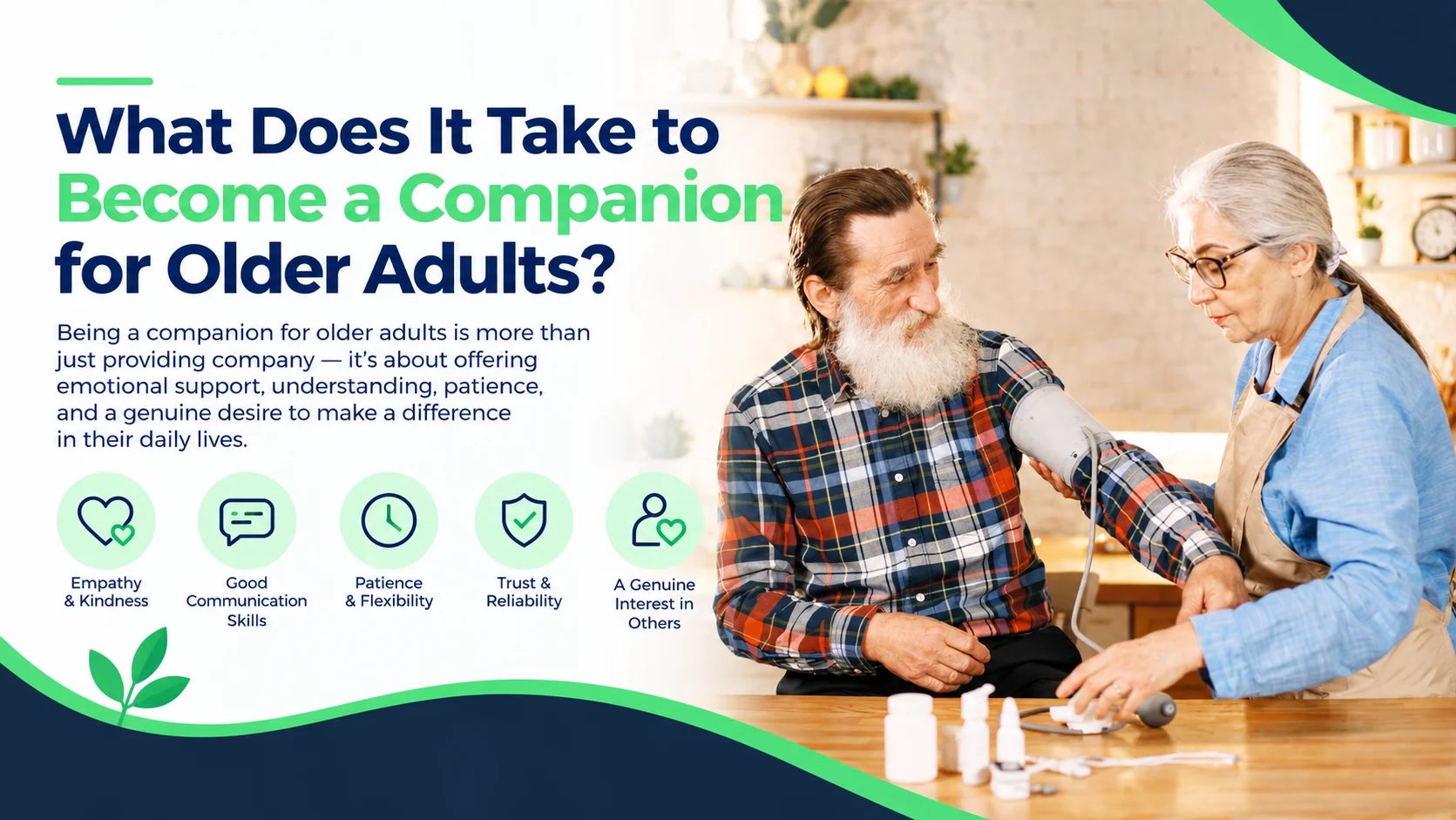
To be a good elderly companion, one should be caring, patient, responsible, and flexible. In addition to that, one should be able to learn how to handle various situations. The following points will discuss some of the most essential skills.
1. Practice Patience and Empathy
Every older adult has his or her own habits, likes, dislikes, and routines. Some people love to have deeper conversations, while others prefer to sit in comfortable silence. A companion should be patient and attentive to an older adult’s personal boundaries.
For instance, if Margaret tells the same story every time you visit, do not bother her by saying that you have heard that tale already. Instead, listen to her story with a genuine smile and share your feelings afterward. This way, you will be able to encourage meaningful communication without hurting someone’s feelings.
2. Learn Communication and Listening Skills
Having proper communication skills is vital for any companion. You need to know how to find common ground with an older adult and express your own thoughts and feelings clearly. In addition to that, you need to be able to listen attentively to a senior, understand his or her needs, and identify problems.
3. Understand Older Adults’ Needs
Every older adult has unique needs, which you should try to identify in order to provide excellent care. For example, some seniors want to be highly independent but need someone to remind them to eat or drink. Others need to be fed, bathed, and dressed but refuse to accept any help with that.
Remember that you are not a medical professional. You should never attempt to diagnose or treat health issues. In case you have concerns about a senior’s health, you need to contact a medical professional and report the situation to a family member or a supervisor, depending on the circumstances.
4. Be Responsible and Dependable
When hiring an elderly companion, a family member wants to be sure that they can rely on this person. That is why it is vital to be responsible and trustworthy as an elderly companion. In most cases, an older adult may only have one companion, so it is essential to be dependable and keep a consistent schedule.
Being responsible also entails sticking to a care plan and following the rules. For example, if a senior needs to be fed at a certain time every day to maintain a regular schedule, you need to ensure that this condition is met. Moreover, a companion should respect a senior’s belongings and personal space and should never exploit this position.
What Else Can an Elderly Companion Do?
An elder companion’s job duties can vary depending on an older adult’s needs and an employer’s requests. For example, some clients only want to engage in light conversation and recreational activities. Others may need help with personal care, household duties, or errands.
Do You Need Any Specific Training or Experience?
Every employer sets specific requirements for this job. In general, there is no need for professional healthcare experience, but some agencies may ask for prior caregiving experience. You should also study general communication skills, elderly care, and safety regulations to work in this field.
How to Become an Elderly Companion in Fredericksburg, VA?
Now that you understand what this job entails, use the following tips to build a career as an elderly companion.
1. Educate Yourself on This Career Path
Research what this job consists of in detail. Understand what duties are included in this position and what skills you should learn. For example, you may want to take courses on communication, first aid, and elderly care to gain practical experience. In addition to that, you should know the differences between personal care, skilled nursing, companion care, respite care, and live-in care.
2. Evaluate Your Skills
Assess your communication skills, organizational skills, and general knowledge of elderly care. Determine whether you are ready to gain experience as an elderly companion. Being a companion requires patience, flexibility, and responsibility. Fortunately, these skills can be developed.
3. Study to Be Qualified for This Position
You may need to take specific courses, depending on your employer’s requirements. The following subjects can be helpful in this career path:
Compassionate Care Starts With One Phone Call
Get in touch with Alliance Home Healthcare Services today to schedule your FREE in-home consultation and discover how our experienced caregivers can improve your loved one’s quality of life. If you’re wondering how to choose the right home healthcare provider, our compassionate team is here to answer your questions, explain your care options, and create a personalized care plan that meets your family’s unique needs.

What Qualities Are Essential for an Elderly Companion?
Being an elderly companion is a fulfilling but challenging experience. You should have the following qualities to be successful in this career:
- Empathy and patience.
- Flexibility and attentiveness.
- Understanding of seniors’ physical and social needs.
- Communication skills.
- Respectfulness and responsibility.
- Ability to set boundaries and know when to seek help.
- Good judgment and decision-making skills.
- Ability to follow the appropriate rules and safety regulations.
Companion Care vs. Personal Care vs. Skilled Nursing
In general, personal care refers to assisting an older adult with activities of daily living, such as eating, dressing, bathing, toileting, and grooming. Skilled nursing, on the other hand, denotes medical expertise, such as nursing and rehabilitative services.
Respite care is a type of short-term care for seniors that allows family caregivers to take a break. Live-in care is a 24-hour companion care service where a companion resides in the older adult’s home.
Companion care focuses on providing social support and limited physical assistance. Unlike personal care, it does not include helping seniors with activities of daily living.
Careers in Companion Care
Becoming an elderly companion can be a great way to make a difference in people’s lives and gain valuable experience. You can work for various employers, including home care agencies. In addition, you may want to learn more about the different careers in elderly care.
Can I Become an Elderly Companion without Healthcare Experience?
This depends on an employer’s requirements, as experience is not mandatory in some agencies. You may also need to gain certain skills and take relevant courses. In general, you should have strong communication skills, be patient and trustworthy, and understand the basics of elderly care. However, every employer has specific requirements, so it is important to review the job description before applying.
What Questions Should I Ask Before Becoming an Elderly Companion?
You should ask about the duties that you are expected to perform, the training required for this job, work schedules, hours, travel time, compensation, and other conditions. In addition, you should ask about the specific tasks and responsibilities that you will have, such as providing personal care or managing medication. Make sure to clarify the policies and procedures you will need to follow and report to a supervisor if something goes wrong. This way, you will know what to do if a difficult situation occurs.
How Companion Care Can Help Families in Fredericksburg, VA
Families in Fredericksburg, VA, may struggle with the idea that their older loved one needs help, but companion care can be a great option. An older adult may feel much better when he or she has someone to talk to, someone to help with errands or light housekeeping, and someone to spend time with.
Alliance Home Healthcare Services offers a wide range of home care services in Fredericksburg, VA, including personal care, companion care, meal preparation, light housekeeping, grocery shopping, transportation and errands, and safety supervision. These services can significantly improve a senior’s quality of life while providing much-needed support to his or her family.
Depending on an older adult’s preferences and needs, a companion can engage him or her in various activities. An older person who enjoys reading or playing games can have a conversation and play with a companion, while an older adult who loves music may enjoy listening to his or her favorite tunes. In addition, a companion can accompany a senior on walks or help with light housekeeping.
When looking for companion care services in Fredericksburg, VA, your primary consideration should be your loved one’s needs. Every client has individual preferences, habits, lifestyle, and care needs that should be taken into account. For example, a senior who enjoys spending time outdoors may want to have a companion who can join him or her on nature walks or help with gardening. On the other hand, a senior who prefers to stay at home may want to have a companion who can engage him or her in recreational activities.
Families must also consider the services offered by a home care agency, such as personal care and transportation, and discuss their requirements with a provider. In addition, it is essential to clarify how a companion will communicate with a senior, ensure their safety and comfort, and manage responsibilities within the identified care plan and schedule.
When choosing the right companion care services, ask questions and remember that a good companion will respect an older adult’s preferences and carefully follow the care plan.
Let’s Get Back to Margaret’s Example
Margaret feels much happier now because she has someone to talk to and share her interests with. Her children also feel reassured because they know that their mother has someone to spend time with during the day. This is the kind of support that every older adult deserves, and companion care can help with that. In fact, this is the kind of support that everyone deserves, regardless of age.
While companion care services cannot solve all of an older adult’s problems, they can significantly improve his or her quality of life. By being attentive to seniors’ needs and having a caring attitude, a companion can help them enjoy their time at home and engage in activities they love.
Conclusion: Is Becoming an Elderly Companion for You?
To conclude, let us discuss whether you have the skills and qualities to become an elderly companion. First of all, it is essential to understand what this job entails. An elderly companion’s job duties mostly consist of providing social support to an older adult and assisting him or her with various errands and light housekeeping. In addition, you need to be able to provide emotional support to a senior and have good communication skills. You should also have a caring attitude and respect an older adult’s boundaries. While empathy and patience can be developed, other skills, such as social and communication skills, may come naturally to you.
To build a career as an elderly companion, you should also learn about the general principles of elderly care and practice empathy and patience. In addition, you may need to take specific courses, depending on an employer’s requirements. You should also understand the differences between companion care, personal care, skilled nursing, respite care, and live-in care.
Now that you have a good understanding of this career path, do you think you are ready for this job? Do you have the necessary qualities to become an elderly companion? Can you provide social support to an older adult and help him or her with errands or light housekeeping? If yes, then you are ready to become an elderly companion and help seniors lead happier lives.
We hope this guide has been helpful to you in determining your career path. Alliance Home Healthcare Services is committed to providing compassionate and professional elderly companion care services in Fredericksburg, VA. We strive to help seniors live their lives to the fullest and support their families throughout the process.
If your family member needs an elderly companion in the Fredericksburg area, Alliance Home Healthcare Services is ready to help.
Contact Alliance Home Healthcare Services to learn more about companion care and other home care services.
Phone: (703) 486-4074
FAQ
1. What qualifications do you need to become a companion for older adults?
Qualifications can vary from employer to employer. Some positions may not require any healthcare-related experience, while others may require some related experience, training, or education. You may also need to complete a background check, provide references, or obtain specific certifications, depending on the requirements of the position.
2. Can I become an elderly companion without nursing experience?
Yes, you can become an elderly companion without nursing experience. Some positions may require prior healthcare experience, while others may only require knowledge of basic patient care or communication skills. Nursing experience is required for positions that require regulated nursing expertise.
3. What skills are most important for a senior companion?
Patience, empathy, and communication skills are essential for a senior companion. In addition to that, knowledge of personal support services, gerontology, or social work can also be beneficial. It is also crucial to understand the ethical and legal aspects of providing care and to know when to seek expert help.