
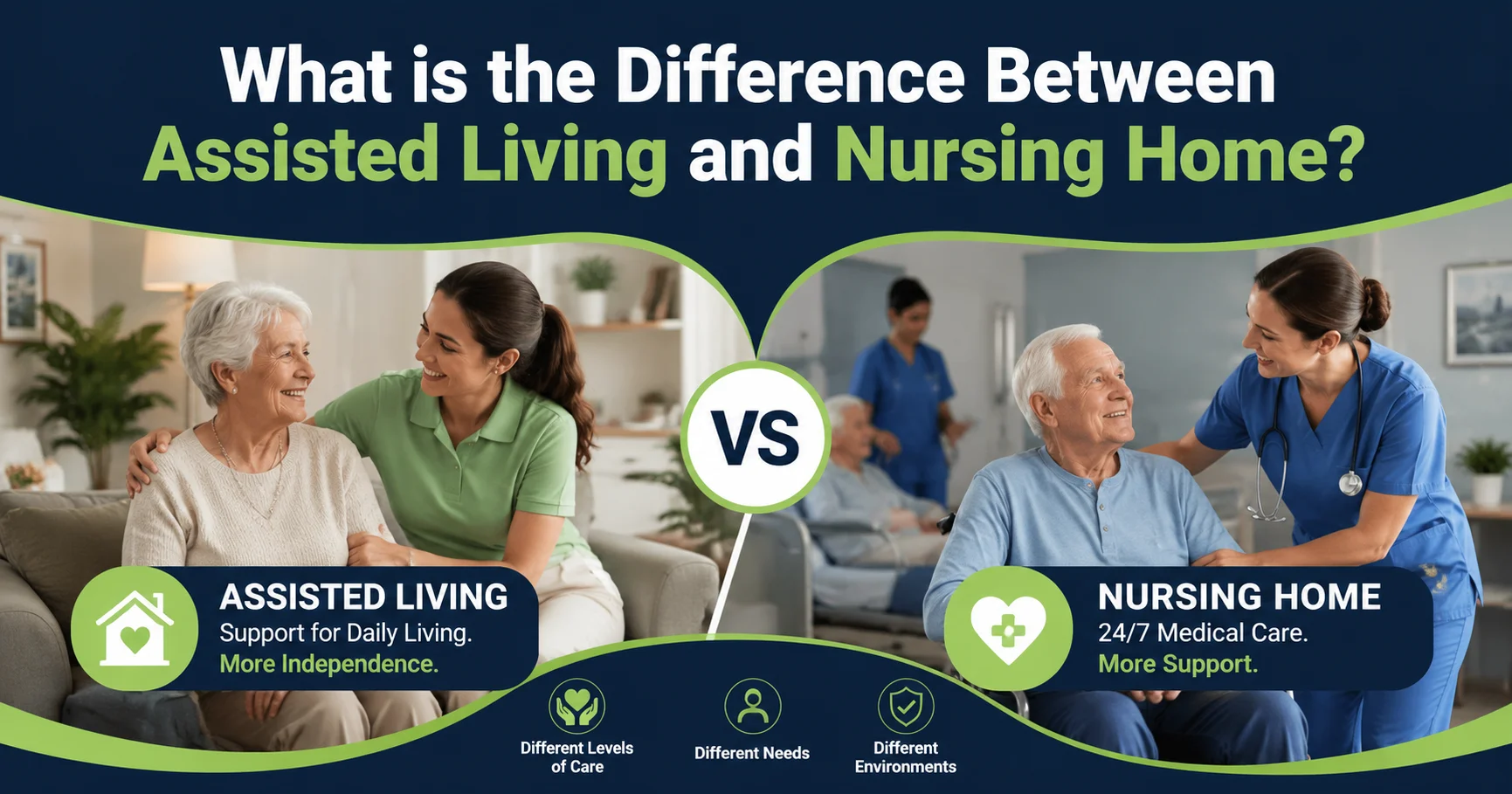
The decision of choosing the best care option for a parent who is aging or spouse one may be overwhelming. Families are often faced with the same crucial concern: what is the difference between nursing and assisted living home?
Although both assisted living facilities and nursing homes offer assistance for seniors but they are designed to provide distinct levels of support, medical demands autonomy, as well as daily help. Knowing the differences between these two will allow families to make a more informed and compassionate choices.
For some senior citizens assisted living can provide an ideal balance between autonomy and support. Some may require the greater amount of medical supervision offered in a nursing facility, sometimes referred to the skilled nursing center (SNF).
Another option that is often overlooked by families: home-based care. It is dependent on the individual’s needs getting personal care skilled nursing, home care as well as private duty care in their home can enable individuals to remain within their own home with the right support.
We at Alliance Home Healthcare Services, we recognize that each person has different needs for care. Our mission is to help families know their options and provide the right care that promotes the dignity, safety and overall high quality of life.
What Is the Difference Between Assisted Living and Nursing Home?
The most important difference is the quality and nature of care offered.
Aided living is typically intended for those who require assistance with the daily activities of living, but don’t require ongoing medical assistance. The majority of residents reside in shared or private apartments, and receive help in activities like bathing dressing, dressing, medication reminders and meals, mobility and housekeeping.
The Nursing home offers a higher degree of nursing and medical treatment for people with serious health issues, medical requirements or disabilities, or who require constant nursing supervision. Nursing homes can provide expert nursing services rehabilitation and medication administration as well as wound treatment and additional medical assistance.
In simple terms:
- assisted living Increased independence and help from a caregiver who can be supportive throughout the day.
- Home for nursing: more intensive medical and nursing treatment.
- Home healthcare Health care services provided at the home of the patient dependent on the eligibility criteria, needs, as well as the available services.
The best option is contingent on the individual’s physical condition as well as medical conditions, the capability to do daily tasks as well as safety considerations, preference, and family situations.
What Is Assisted Living?
Assisted living is a care option for seniors who want to maintain a degree of independence but require help with daily tasks.
A assisted living facility usually offers accommodation, meals and personal assistance, as well as social activities, as well as security surveillance.
Services Commonly Available in Assisted Living
Based on the locality the community, services could be:
- Help with grooming and bathing
- Dressing assistance
- Toileting assistance
- Reminders for medication
- Preparation of meals and services for dining
- Housekeeping
- Laundry
- Transportation
- Mobility assistance
- Social activities
- Security supervision
- Wellness programs
- Systems of emergency response
Assisted living communities are typically designed to help residents stay in shape and stay socially active.
For instance, an older adult who is able to walk on their own but is struggling with cooking washing, bathing, or laundry might benefit from assisted living.
Who May Benefit From Assisted Living?
Assisted living might be a good option for someone who
- Needs assistance with daily living activities
- Are you having difficulty managing your household
- Mild to moderate mobility issues
- Reminders on medication are needed
- Feels lonely living on their own
- Would like to have access to social activities
- Additional safety supervision is required.
- Does not require 24/7 qualified nursing assistance
The most important thing to remember is that a person usually does not require the extensive medical setting that is found in nursing homes.
What Is a Nursing Home?
The nursing home can be described as a healthcare facility that is designed for those who require more comprehensive medical and nursing support.
Nursing homes are often referred to as skilled nursing centers however the terms may have different meanings based on the particular type of care provided and the particular situation.
Residents can receive treatment by licensed nurses as well as nursing assistants, therapists and doctors, and other health specialists.
Services Commonly Provided by Nursing Homes
The facility’s requirements will determine the care plan of the resident The services offered can include:
- 24-hour nursing supervision
- The administration of medications
- Wound treatment
- Management of chronic diseases
- Health evaluations
- Recovery from hospital
- Rehabilitation
- Physical therapy
- Therapy for occupational disorders
- Speech therapy
- Assistance in bathing and dressing
- Care for continence and toileting
- Help with feeding
- Mobility assistance
- Medical care that is complex
- Care coordination
Nursing homes are typically suitable for those who are unable to safely manage their personal or medical health care needs on their own.
Assisted Living vs. Nursing Home: Key Differences
Understanding the difference becomes simpler when you compare the two options against each other.
Factor | Assisted Living | Nursing Home |
Principal goal | Assistance for daily living | Nursing and medical care |
Independence | The average is higher | Generally speaking, the cost is lower |
Medical requirements | Usually, the lower | Sometimes, they are more complex or higher |
Nursing care | Available in limited quantities or upon request | More comprehensive |
Daily assistance | Common | Common |
24/7 surveillance | Often available | Generally, it is available |
Living space | Residential/community setting | Residential setting that is geared towards healthcare |
Social activities | Typically, they are extensive | Available, but could vary |
Nursing professionals with expertise | Usually, the amount is limited | The most important component of health care |
Rehabilitation | It could be made readily available | Generally readily available |
The best fit for | Seniors who require support on a daily basis | Patients who require medical treatment that is more extensive |
The most significant difference is not just the location where one lives. It’s the amount of medical care and medical supervision they need..
Level of Care: Assisted Living vs. Nursing Home
One of the main aspects to consider when making this choice is the elderly’s degree in care.
Someone who may require assistance in bathing, dressing and eating chores might not require the medical care of a nursing residence.
On the other hand, a person suffering from a medical condition that is severe or complex medical needs and mobility restrictions that are extreme or a lot of wound-care requirements or any other health care needs might require specialized nursing.
Activities of Daily Living
Healthcare professionals typically look at the activities of daily living (ADLs) when evaluating the needs of patients.
ADLs usually consist of:
- Bathing
- Dressing
- Eating
- Toileting
- Transferring
- Maintaining your personal hygiene
The ability of a person to perform these tasks can help family members and health professionals know the amount of assistance needed.
When Does Someone Need a Nursing Home?
A nursing home could be contemplated if the physical or medical demands are too numerous to handle with regular routine help.
Possible indicators could include:
- Common medical issues
- Mobility limitations that are significant
- Complex medication management
- The need for continuous nursing care
- Comprehensive treatment for wounds
- Medical equipment that is specialized
- Chronic health issues that cause serious harm to the body.
- Recovery following a major hospitalization
- Rehabilitation is required
- The difficulty of maintaining personal safety
- Need assistance in a wide range of numerous ADLs
But, the fact that you require more help is not a guarantee that nursing homes are the only alternative.
Families should talk about the person’s concerns with their physician health care team, and licensed health professionals prior to making a major decision about care.
When Is Assisted Living a Better Fit?
Assisted living is an option if the senior is largely independent, but requires help in daily things.
Imagine an elderly parent of 78 years old who is able to walk, talk and perform the majority of their personal tasks on his own however has trouble preparing food, maintaining the house tidy, remembering medication and keeping social connections.
This person may not require an nursing home.
Assisted living may provide a daily help while allowing an individual to enjoy a higher level of autonomy.
The Home Healthcare Alternative
Family members often assume that their choice is assisted living in vs. nursing homes. However, in reality, home-based care is a different option.
For a large number of seniors and those who have disabilities, receiving the right treatment at home can bring emotional security and comfort.
The home healthcare system allows the patient to be at home with familiar possessions routines, friends pet, family members.
We are Alliance Home Healthcare Services, we offer a range of home-based assistance designed to meet the individual’s requirements.
Personal Care Services
The personal care of a person can assist them in their everyday tasks, including:
- Bathing assistance
- Hygiene and grooming
- Dressing assistance
- Incontinence and toileting
- Transfer assistance and mobility
- Reminders for medication
- Assistance with feeding
- Prevention of falls
Home Care Services
Non-medical home care may also help with daily living by:
- Companion care
- Preparing the meal
- Light housekeeping
- Laundry
- Grocery shopping
- Transportation and other errands
- Security supervision
- Social engagement
These services are particularly beneficial for those who wish to stay at home and receiving help with their daily activities.
Skilled Nursing Services
If you require nursing assistance from a professional the skilled nursing support could include:
- Skilled nursing visits
- The administration of medications
- Management of medication
- Wound treatment
- Post-surgical treatment
- Management of chronic diseases
- Health evaluations
- Education of the family and patient
- Physician coordination
The accessibility and the appropriateness of particular services will depend on the patient’s health condition, their the care plan, the applicable regulations and clinical evaluation.
Private Duty Nursing for Complex Care Needs
Certain people have medical conditions which require more attention from a specialist.
Private duty nursing is a way to provide one-on-one support to patients with health issues that are complex.
The services that could be offered include:
- Long-term medical treatment
- Medical care that is complex
- Tracheostomy treatment
- Care of feeding tube
- Catheter care
- IV therapy
- Support for ventilators
This kind of care might be especially relevant to those who require nursing care that is specialized but whose families are considering whether it is safe to have care delivered at home.
How to Decide Between Assisted Living, Nursing Home, and Home Care
There is no one answer that is suitable for every family.
Begin with these inquiries:
1. How Independent Is the Person?
Can they bathe safely and get dressed, visit bathrooms, stroll and move independently?
If they only require a small amount of assistance assisted living or in-home care could be worth a look.
2. What Medical Care Is Required?
Does the person require care for wounds or medication administration? Does the individual require advanced disease management, specialized nursing or regular medical monitoring?
Higher medical requirements could signal the need for nursing home-based or skilled care.
3. Is the Home Environment Safe?
Be aware of the dangers of falling, stairs bathroom accessibility Safety of medication, as well as the ability of an individual to react to emergency situations.
A home safety audit will help you identify any potential dangers.
4. What Does the Person Want?
The preferences of the individual matter.
Certain seniors feel more secure in a social setting with built-in social events. Some prefer staying at home.
Care decisions should be based on respect for the dignity and preferences of the person when it is safest.
5. What Can the Family Realistically Provide?
Family caregivers typically wish to take care of everything But caregiving can become physically and emotionally exhausting.
Professional home care or residential care may help families provide sustainable support.
Cost and Payment Considerations
Cost is a major aspect in comparing assisted living as well as nursing homes and home care.
Prices can be quite different based on
- Geographic geographical location
- The level of care
- The number of hours for care
- Facility type
- Room arrangement
- Medical Complexity
- Services provided
- The length of care
Families should inquire with every provider for an description of the items included in the quote.
The coverage of insurance can vary according to the type of services. Medicare, Medicaid, long-term care insurance, private insurance and personal funds could be covered by different eligibility and rules.
Since coverage requirements may be subject to change and depend on the individual’s situations, families are advised to verify the benefits with their insurer company as well as the relevant government programs.
Emotional Considerations for Families
Making a choice to seek treatment isn’t only an economic or medical choice. It’s a personal one.
A daughter may be worried about the possibility that putting her mother into assisted living would mean that she’s taking her place as caregiver.
Sons may feel guilty over thinking about a nursing home for his father following the hospitalization.
An individual spouse may would prefer that their loved one stay at home as long as is safe.
This is normal.
The objective isn’t to determine the solution that will make a family member feel less ashamed. The aim is to come up with an arrangement for care that offers the proper level of security and dignity, as well as support and high quality of living.
Sometimes, that’s assisted living. Sometimes, it’s an in-home nursing facility. Sometimes, the professional care at home allows people to stay at home.
Questions to Ask Before Choosing a Care Option
Before making a final decision think about asking:
- What level of care do my loved one in need of right now?
- What is the amount of assistance needed for ADLs?
- Does the patient require skilled nursing?
- Do you have medical issues that are complex?
- Do you need 24-hour supervision?
- Care can be safely provided at the home?
- What do people like about each other?
- What are the services included in the hourly or monthly cost?
- Are the medications prescribed or just to be reminded?
- Is transportation available?
- What happens when a person’s health condition changes?
- Does the doctor create an individual care plan?
- How do families keep their families informed of any changes to care?
Finding out the truth can make a decision easier.
Alliance Home Healthcare Services: Compassionate Care at Home
We at Alliance Home Healthcare Services, we believe that the best care starts with understanding the individual, not only the condition or diagnosis.
Our home health solutions are specifically designed to assist families and individuals with various daily living such as personal care and nursing needs, as well as pediatric restorative care, and other specialized demands.
From personal assistance and companion care to skilled nursing and private duty nursing residential care and respite care and even pediatric home care our services can be customized to your individual requirements when needed.
Our staff of caregivers and healthcare professionals will assist families in ensuring security, independence, comfort and dignity in the family environment.
If you or your family members are trying to decide whether you should go to assisted or homecare or a nursing facility is the best choice for you talking to experienced healthcare professionals is the initial step.