
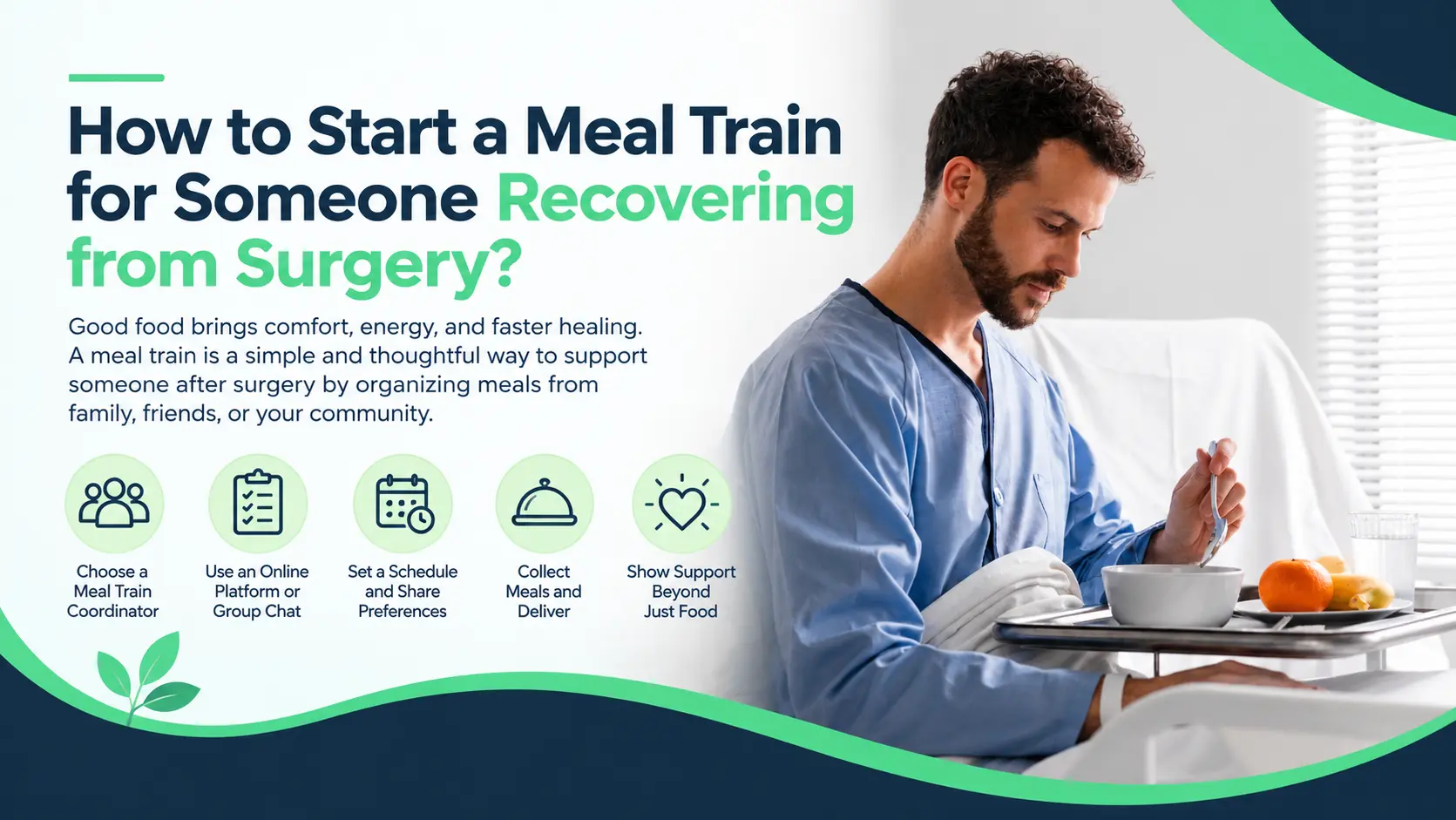
Recovering from surgery can be physically taxing and emotionally taxing. Between surgeries, medications, rests, and doctors’ instructions, even the simplest of tasks like making breakfast or dinner can prove to be a challenge. Having a meal ready for the patient to enjoy can make all the difference. A meal train is an organized effort between friends, relatives, neighbors, and the community to help someone in need with meals. Instead of asking one person to prepare every meal for the patient, everyone can chip in and take turns preparing food in an organized, scheduled manner. For residents of Fredericksburg, VA, setting up a meal train can be a great opportunity to rally the community to help a loved one or neighbor who has had recent surgery. Combined with home care assistance, neighbors can help lighten the load so that the patient and their caregivers can rest and recover. In this guide, we’ll go over how to set up a meal train for someone recovering from surgery. We’ll explain how to set up meal schedules, ensure that everyone’s needs are met, avoid common pitfalls, and how to know when professional home care may also be needed.
Families looking for compassionate support during recovery can learn more about Alliance Home Healthcare Services and how our team helps individuals maintain comfort and independence at home.
What Is a Meal Train and Why It's Helpful After Surgery
A meal train is an organized effort between friends, family members, coworkers, and neighbors to provide meals for someone who has been facing a busy time in their life.
Instead of asking one person to prepare multiple meals throughout the week, everyone can chip in and sign up for a date and time to prepare food for the recipient
How a Meal Train Can Help a Patient Recover From Surgery
Life after surgery can be difficult. People must take it slow and easy so that their bodies can properly heal. Cooking requires them to stand for long periods of time, bend over, lift heavy pots and pans, and carry groceries in and out of the house. All of this can wreak havoc on the body.
A meal train can help immensely by:
Making mealtime easier and more convenient;
Taking the strain off of the patient’s caregivers;
- Making it easy to schedule meals in advance;
Lifting the spirits of the patient and the household;
And getting the community involved in the healing process.
How to Start a Meal Train for Someone Recovering From Surgery
Setting up a meal train doesn’t need to be difficult. The most important thing is to determine the patient’s needs, create a schedule that works for everyone, and to make sure that everyone communicates clearly. Here are the most important steps to take when starting a meal train:
Talk to the Patient or Their Family About Their Needs
Before reaching out to others, talk to the patient or their primary caregiver to determine how a meal train can best serve them.
Along with community meal support, families may benefit from personalized assistance with everyday activities. Explore our home healthcare services to learn about the support available for individuals and their families.
Is there a safe place to leave meals?
Some people may only need meals for the first week after surgery while others may need them for up to a month or longer. Always ask for what the patient and their caregivers need most. Don’t share intimate or medical details with others without the patient’s permission.
The dates for which meals are needed;
The available slots;
The contact information of those who signed up;
Instructions for when and where to drop off the meal;
Any dietary restrictions or preferences;
Instructions for how to prepare the meal.
What Meals Should You Serve With a Post-Surgery Meal Train?
Practical Meal Ideas for a Meal Train
When choosing the meals that you'd like to provide, always keep it simple.
Soups and stews (that can be reheated);
Casseroles (especially ones that can be divided and reheated for multiple people);
And freezer-friendly meals.
These are just some general meal ideas. There’s no need to solicit medical advice when choosing meals unless the patient has a specific diet that they need to follow. That being said, patients, caregivers, and the meal train coordinator should follow the dietary and medical instructions provided by medical professionals.
How to Prepare Meals and Avoid Food Restrictions and Allergies
Before preparing meals for the recipient, always ask if they have any allergies, preferences, or restrictions.
Always label meals clearly and note any restrictions or allergies. Never assume that someone can eat something just because it’s healthy.
Patients recovering from surgery sometimes have restrictions that relate to food texture, salt, or fluid consumption. Always follow the instructions given by medical professionals when preparing meals.
When preparing meals, managing household tasks, or completing daily errands becomes challenging after surgery, our home care services can help make everyday routines more manageable.
How to Prepare Meals That Are Easy to Store and Reheat
Make sure that the meals that you prepare can easily be reheated and served without requiring extensive preparation.
Use food-safe containers whenever possible and label them with the contents of the meal, the date that it was prepared, storage instructions, and reheating instructions. Always ensure that meals are reheated to a safe temperature before delivering them. When possible, encourage recipients to use containers that can be reheated without requiring them to transfer the food to another dish.
Set Specific Instructions for Meal Deliveries
Choose a specific delivery window that works for the recipient and their caregivers. Ask if someone will be home to let the volunteer know when they arrived or if a meal can be left in a safe place.
Create a Realistic Food-Serving Schedule
Avoid setting up too many meals in the beginning and not enough meals later in the week or month
First, figure out how many meals the patient will need and how many people in their household are capable of cooking.
If the patient’s caregivers are able to prepare a meal in the morning but not in the evening, a meal train should focus on providing dinners to the household.
You can schedule 3 or 4 dinner meals per week for 2 weeks, for example, and provide the family with groceries and freezer-friendly meals.
Compassionate Care Starts With One Phone Call
Get in touch with Alliance Home Healthcare Services today to schedule your FREE in-home consultation and discover how our experienced caregivers can improve your loved one’s quality of life. If you’re wondering how to choose the right home healthcare provider, our compassionate team is here to answer your questions, explain your care options, and create a personalized care plan that meets your family’s unique needs.

What Meals Should You Serve With a Post-Surgery Meal Train?
Choosing the meals that will be served is one of the most important parts of setting up a meal train. It’s vital to remember that the goal of a meal train is to provide convenience to the recipient.
Practical Meal Ideas for a Meal Train
When choosing the meals that you’d like to provide, always keep it simple.
Soups and stews (that can be reheated);
Casseroles (especially ones that can be divided and reheated for multiple people);
Rice and grain bowls with vegetables and a protein;
Pasta dishes (that can be shared with multiple people);
Prepared breakfast foods (like oatmeal or breakfast casseroles);
How to Prepare Meals and Avoid Food Restrictions and Allergies
Before preparing meals for the recipient, always ask if they have any allergies, preferences, or restrictions. Always label meals clearly and note any restrictions or allergies. Never assume that someone can eat something just because it’s healthy. Patients recovering from surgery sometimes have restrictions that relate to food texture, salt, or fluid consumption. Always follow the instructions given by medical professionals when preparing meals.
For individuals who need consistent assistance with cooking and organizing meals, our meal preparation services offer personalized in-home support based on individual preferences and the agreed-upon care plan.
How to Prepare Meals That Are Easy to Store and Reheat
Always keep the recipient’s needs in mind when preparing their meals.
Make sure that the meals that you prepare can easily be reheated and served without requiring extensive preparation.
Use food-safe containers whenever possible and label them with the contents of the meal, the date that it was prepared, storage instructions, and reheating instructions. Always ensure that meals are reheated to a safe temperature before delivering them. When possible, encourage recipients to use containers that can be reheated without requiring them to transfer the food to another dish.
Set Specific Instructions for Meal Deliveries
Choose a specific delivery window that works for the recipient and their caregivers. Ask if someone will be home to let the volunteer know when they arrived or if a meal can be left in a safe place.
Always give delivery instructions to the volunteer who signed up for that specific date. If the recipient or caregiver has asked for uninterrupted rest or doesn’t want to talk to anyone, ask the volunteer to limit their visit. The point of a meal train is to help the recipient and their caregivers, not overwhelm them with extra work and stress.
Avoid Extra Food and Food Waste
Before asking for volunteers, set up a system to make sure that the recipient doesn’t get extra food that they don’t have the storage space for. Ask volunteers to check the calendar for the dates that they’ll need to bring meals. Encourage volunteers to only bring meals or groceries for the recipient on the date that they signed up.
Setting up a system can help you keep track of everything. A simple meal train spreadsheet can also help you track the following:
If there are too many volunteers but not enough slots open on the meal train calendar, encourage them to bring groceries or prepare meals in advance that can be reheated and eaten later on. Always make sure to ask for what the recipient and their caregivers need before soliciting donations.
Make Sure Communication Is Simple
A short confirmation message to the recipient or their caregivers before delivering a meal can help you make sure that your delivery won’t be a surprise or inconvenience. It can also help you make sure that the recipient won’t get duplicate meals from two different volunteers.
The meal train coordinator should also set up a simple way for volunteers to cancel their shift if they aren’t able to deliver on the date that they signed up. If volunteers cancel, they should let the recipient or the meal train coordinator know as soon as possible so that an alternate volunteer can be found.
The communication needs of the recipient and their caregivers should be determined by them and the needs of the patient. Always make sure to keep in mind that the recipient and their caregivers may not have the time or mental energy to deal with additional visitors and questions.
Common Meal Train Mistakes
A meal train should make the life of the recipient and their caregivers easier. Avoid making the following common mistakes that can cause additional stress.
Ignoring Food Restrictions
Always ask the recipient or their caregivers if they have any food restrictions, allergies, or preferences before preparing meals.
How a Professional Caregiver Can Help a Patient After Surgery
Alliance Home Healthcare Services offers professional caregivers who specialize in meal preparation as a part of their home care services. Depending on the needs of the patient and the care plan that’s agreed upon by the patient and their caregivers, a professional caregiver can help prepare ingredients, cook meals, plate food, and clean up after the meal. Professional caregivers can also help with shopping for groceries, making sure that the patient has enough food in the house, and taking care of any other errands that the patient or their caregivers might find to be a strain during their recovery. Companion care can also help provide additional support to patients who need it. The amount and type of caregiver assistance that’s needed will depend on the individual patient and their care needs. When a patient requires skilled nursing care or more specialized treatment, patients and their caregivers should work with the professional medical staff to arrange for the appropriate skilled care. Community meal support and professional caregiver assistance can work together to provide the support that’s needed for a patient recovering from surgery.
If your loved one needs additional support during recovery, book an appointment with Alliance Home Healthcare Services to discuss your family’s needs and explore appropriate home care options.
Supporting Families Recovering From Surgery in Fredericksburg, VA
For the residents of Fredericksburg, VA, setting up a meal train can be a great opportunity to rally the local community to support a neighbor recovering from surgery. Local volunteers can bring home-cooked meals, prepare grocery store meals, or bring additional prepared meals to the patient’s door on a rotating basis, depending on the patient’s needs. Simple communication and careful planning can help make a meal train a helpful and sustainable addition to the patient’s treatment and recovery.
Alliance Home Healthcare Services understands that the home environment can pose additional challenges to patients and their caregivers. Our professional caregivers can help with meal preparation and companion care, in addition to other tasks. We encourage families and caregivers to consult us to learn more about our home care services and how we can help you or your loved one.