
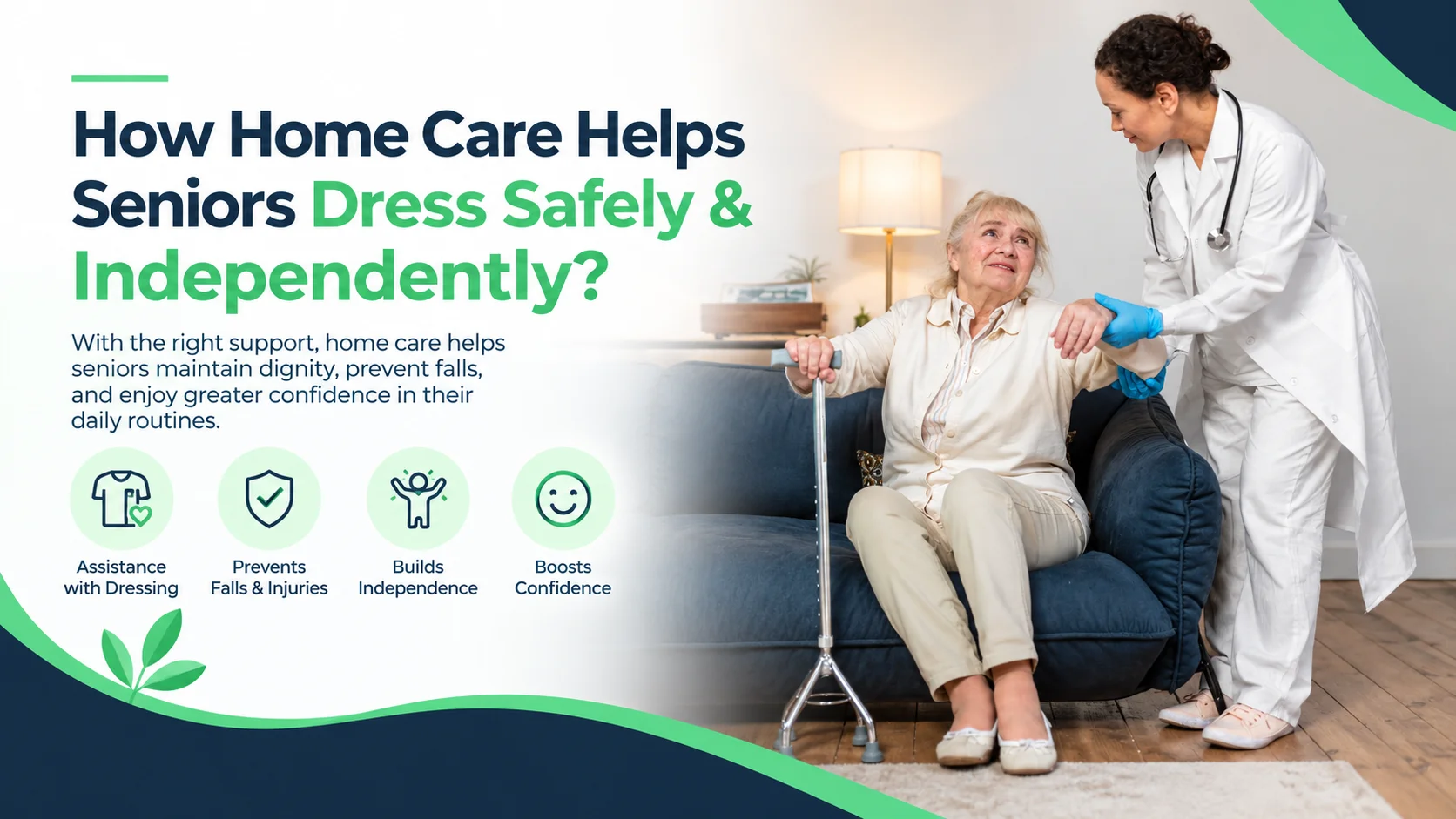
For many seniors, getting dressed is a simple part of the morning routine. But for those facing mobility, balance, strength, flexibility, or coordination changes, putting on a shirt, pulling up pants, fastening buttons, or putting on shoes can become surprisingly difficult. What once took a few minutes can become frustrating, uncomfortable, or even unsafe.
This is where personalized home care for seniors can make a difference.
At Alliance Home Healthcare Services, our caregivers provide compassionate Dressing Assistance that helps seniors complete their daily routines while upholding dignity, personal choice, and independence. Instead of assuming a senior needs everything done for them, appropriate caregiver support can encourage a senior to do what they can safely and receive help with the rest.
Families searching for dependable senior home care should know how dressing assistance can help recognize when additional support may be beneficial.At Alliance Home Healthcare Services, we are committed to helping seniors and individuals receive compassionate, personalized support in the comfort of home. Learn more about our home healthcare approach and how we support individuals and families throughout their care journey.
Why Getting Dressed Can Become Difficult For Seniors
Aging does not automatically mean a person will need help getting dressed. However, there are changes that can happen which affect flexibility, muscle strength, balance, joints, coordination, fatigue, mobility, and more.
Seniors may experience:
Reduced flexibility or range of motion
Muscle weakness
Balance difficulties
Joint stiffness or arthritis
Tremors or reduced hand coordination
Difficulty bending or reaching
Fatigue
Mobility limitations
Changes following surgery or illness
Cognitive changes that affect daily routines
A senior who was once dressing themselves may need help with only certain parts of the process.
An example may be that someone can choose their clothes and put on a shirt but still need help with socks, shoes, buttons, or zippers. Another may need help to help support their balance to stand.
Recognizing these changes can help families to recognize when additional support may benefit a senior before getting dressed takes on becoming a source of frustration or injury.
The Emotional Side of Dressing Assistance
Getting dressed involves more than what clothing one wears.
Imagine an older woman named Margaret who has spent decades choosing what she would like to wear each morning. Her clothes are a reflection of her personality and the activities she enjoys. She recently has had arthritis begin in her hands and has also experienced reductions in her balance. Margaret’s daughter has noticed that she is starting to limit her choices of what to wear and avoid certain outfits in favor of others. Margaret has started to view the process of getting dressed as tiring and frustrating
With personalized caregiver support, Margaret does not have to change her routine. She can still choose what she would like to wear. Her caregiver just provides help with the parts that are becoming more difficult.
This small change can have a big effect. Margaret does not feel that she is being controlled in what she does every day. She receives help where she needs it without having to give up the independence she has enjoyed prior. This is one of the most important principles of quality senior home care: helping a person live their life, not unnecessarily taking control.
Every individual has different care needs, which is why personalized support can make a meaningful difference. Explore our home healthcare services to learn about the different types of assistance available for seniors, adults, children, and families.
How Home Care Supports Safe Dressing
Professional in-home caregivers can assist seniors in making the process of dressing as safe, organized, and manageable.
1. Help With Choosing Clothing
Choosing appropriate clothing is not always easy for a senior, especially when a senior has difficulty organizing their wardrobe or determining what is appropriate for the day’s activities.
2. Provide Assistance With Putting On Clothing
Some clothing requires stretching, reaching, bending, or balancing to put on.
Caregivers can help seniors with shirts, pants, dresses, sweaters, jackets, and other garments while encouraging seniors to complete the parts they can manage.
3. Help With Buttons, Zippers, And Fasteners
Small fasteners can be especially difficult for seniors experiencing arthritis, reduced grip strength, tremors, or limited dexterity.
Caregivers may help seniors with buttons, zippers, snaps, hooks, shoe fasteners, and other clothing closures. Adaptive dressing aids may be considered as appropriate.
4. Help With Socks And Footwear
Putting on socks and shoes can require flexing, reaching, and bending.
A caregiver can help seniors with socks, slippers, shoes, and other footwear. Proper footwear is also important for everyday mobility and comfort.
5. Help With Positioning
Dressing while standing can be difficult for someone with balance or mobility challenges.
Depending on the person’s needs, caregivers can encourage safer routines, such as completing appropriate portions of dressing while seated rather than unnecessarily standing. Families should discuss significant mobility or balance concerns with an appropriate healthcare professional.
How Dressing Assistance Encourages Independence
Some families worry that receiving caregiver assistance can make a senior more dependent.
Personalized care can take the opposite approach when it is centered around independence.
The goal is not necessarily for the caregiver to do everything. Instead, the caregiver can determine what the senior can safely do and provide assistance with the rest.
The senior chooses the outfit. The senior puts on a shirt. The caregiver helps with difficult buttons. The senior puts on pants while seated. The caregiver helps with footwear. The senior completes the rest. This provides an opportunity for the senior to remain actively involved.
When getting dressed becomes challenging, personalized caregiver support can help make the routine safer and more comfortable. Learn more about our Dressing Assistance services and how we can support clients while encouraging dignity, confidence, and independence.
Encouraging Choice And Control
Personal choice is an important part of dignity.
Seniors should be encouraged to participate in deciding what they would like to wear whenever possible. The choice of an outfit can provide a sense of routine, identity, and control. Caregivers can provide assistance while not unnecessarily removing this choice.
When Should Families Consider Dressing Assistance?
Families may want to consider additional personal-care support when a senior begins to experience noticeable difficulty with everyday dressing.
Some potential signs include:
Taking significantly longer to get dressed
Frequently struggling with buttons or zippers
Avoiding certain clothing
Having difficulty putting on socks or shoes
Losing balance while dressing
Needing help to get clothing on or off
Becoming frustrated during the morning routine
Experiencing fatigue during dressing
Wearing inappropriate clothing for the weather
Compassionate Care Starts With One Phone Call
Get in touch with Alliance Home Healthcare Services today to schedule your FREE in-home consultation and discover how our experienced caregivers can improve your loved one’s quality of life. If you’re wondering how to choose the right home healthcare provider, our compassionate team is here to answer your questions, explain your care options, and create a personalized care plan that meets your family’s unique needs.

Having difficulty managing clothing due to mobility limitations
One difficulty on its own does not necessarily mean that someone needs ongoing home care. However, repeated struggles may be an indicator that additional support could help the everyday life of a senior be easier.
If your loved one is having difficulty with daily dressing or other personal-care routines, taking the first step can help you understand available support. Book an appointment with Alliance Home Healthcare Services to discuss your family’s needs and explore personalized care options.
Dressing Assistance As Part Of Personal Care
Grooming And Hygiene
Caregivers may provide appropriate assistance with grooming and hygiene routines to help seniors maintain personal comfort and appearance.
Bathing Assistance
Bathing can involve many of the same challenges as dressing, such as balance, mobility, reaching, and transferring.
For some clients, assistance with bathing and dressing can help provide a more organized and comfortable personal-care routine.
Toileting And Incontinence Care
Some seniors may need additional support with toileting or incontinence-related routines. Compassionate care can help ensure the privacy and dignity of a senior.
Mobility And Transfer Assistance
Individuals with mobility limitations may need help moving safely between locations or changing positions as part of their daily routine.
When multiple needs exist, families can discuss an individualized care plan with their home healthcare provider.
Suitable for the senior's mobility needs
Some people may benefit from adaptive clothing or other dressing tools. Some examples of commonly available dressing aids include long-handled shoehorns, reachers, button hooks, and zipper pulls. Whether a particular aid is appropriate depends on the person’s individual abilities and safety needs. A healthcare professional or occupational therapist can provide guidance if specialized adaptive equipment is being considered.
Benefits Of Home-Based Dressing Support
Receiving care at home can offer multiple benefits.
Comfort In Familiar Surroundings
Care can be designed around what a person can do comfortably.
Greater Dignity
Respectful assistance allows seniors to receive help without their personal choices being ignored.
Reduced Daily Frustration
Tasks that once caused stress can be more manageable with appropriate support.
Family Peace Of Mind
Family members can feel more reassured that their loved one has assistance for challenging daily activities.
Learn, Care & Grow With Us
At Alliance Home Healthcare Services, Learn, Care & Grow With Us represents our commitment to understanding each client’s individual needs and providing compassionate support throughout their home care journey.
We believe that quality care is not simply about completing a task. It is about building trust, respecting personal choices, encouraging independence, and helping individuals remain connected to the routines that make their lives meaningful.
When caregivers take time to understand what a senior can do themselves and where assistance is needed, everyday care can be a more positive experience.
Dressing is often just one part of a senior’s daily personal-care routine. Our Personal Care Services can provide additional support with bathing, grooming and hygiene, toileting, mobility, medication reminders, feeding, and fall prevention based on individual needs.