
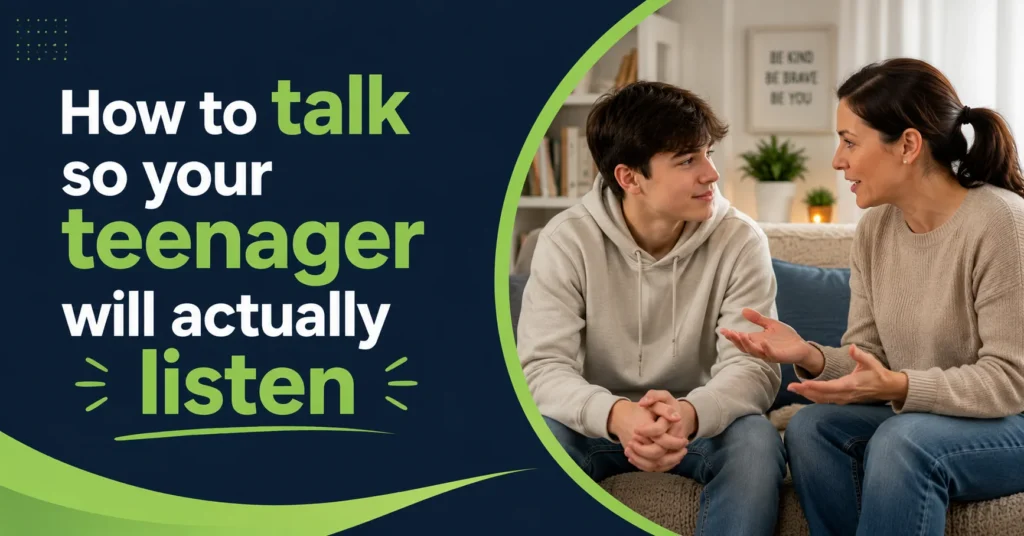
The teenage years can be like a rollercoaster of emotions, and not just for teenagers, but for parents too. A day passes and your child discusses every aspect of school or friends, as well as dreams. On the next day, every conversation is ended with a shrug, single word answer or a slammed bedroom doors.
If you’ve ever thought, “Why won’t my teenager talk to me anymore? “ You’re not alone.
In Alliance Home Healthcare Services We understand the importance of caring for children goes over physical and mental health. Well-being in the emotional realm, healthy communication and strong family connections are crucial in helping teenagers become strong, confident adults. Families in Fredericksburg, VA frequently seek advice regarding strengthening their parent-teen relationship especially during difficult growth times.
This guide will provide you with ways to improve your the communication between your children, lessen conflict and establish lasting trust with your teenager.
Why Teenagers Stop Listening to Parents
Before you alter the way you speak It is important to know the reasons why communication becomes more difficult in the adolescent years.
Teenagers undergo a lot of physical, emotional, as well as mental changes. Their brains are still growing specifically the brain regions that are responsible for making decisions as well as emotional regulation and controlling impulses.
A few common reasons why teens seem to “stop listening” include:
- Struggling to be independent
- Sensitivity to emotions
- Stress from school
- Social pressures
- Fear of judgement
- Depression and anxiety
- Hormonal changes
- Digital distractions
- Insecurity after a series of conflict
The majority of teenagers don’t want to ignore their parents, they’re just trying to discover the person they’re.
A Story Many Parents Will Recognize
Sarah is mother of a 15 year old son who lives in Fredericksburg loved having meals with her son.
As time passed, these conversations faded away.
Each question was addressed with:
- “Fine.”
- “Nothing.”
- “I don’t know.”
Sarah was of the opinion that her son was no longer interested.
In the evening, instead of asking a second set of questions, she stood by him while he played basketball on the driveway.
After a few quiet minutes, she declared,
“Looks like you’ve had a rough day. “
There was no class.
There is no advice.
No criticism.
Just understanding.
In the first of a while her son talked openly about friendship pressures, school pressures, issues, and being overwhelmed.
Sometimes teenagers don’t need solutions.
They require someone to listen.
Why Listening Is More Powerful Than Talking
Many parents believe that successful communication is about giving suggestions.
In fact, teenagers tend to listen once they are able to feel heard.
If parents are attentive the teenagers experience:
- Safe
- Understood
- Accepted
- Respected
- Valued
This is because emotions are a natural way to increase collaboration.
Instead of planning your next answer, concentrate completely on understanding what your teenager is trying to convey.
10 Practical Ways to Talk So Your Teenager Will Actually Listen
1. Start With Connection Before Correction
Teenagers don’t usually respond well to criticism immediately.
In place of saying
“Why didn’t you clean your room? “
Try:
“How was your day? You seemed stressed when you got home. “
Connection reduces defensiveness.
2. Choose the Right Time
Timing is everything.
Do not engage in serious conversations when your child is:
- Exhausted
- Hungry
- Angry
- Distracted
- Studying
- Games to play
- Chatting with friends
More memorable moments include:
- On car rides
- Walking with each other
- Cooking dinner
- Before the time of bed
- In the time of sharing activities
Conversations that are meaningful happen naturally and not in formal family gatherings.
3. Ask Open-Ended Questions
Instead of asking questions that end by “yes” or “no,” encourage conversations.
Examples:
- What was the most memorable aspect that you experienced today?
- What is the reason for today’s difficulty?
- How do you feel about your school?
- What can you suggest that might be of assistance?
- Do you have any questions or concerns that you’d like me understand?
Questions that are open-ended encourage thoughtful responses.
4. Avoid Constant Lectures
The long lectures can cause teens to think “check out.”
Instead:
- Keep messages short.
- Concentrate on one thing.
- Talk calmly.
- Give your child the time to react.
A quick conversation is generally more effective than a 30-minute lecture.
5. Validate Their Feelings
Validation doesn’t necessarily mean agreeing with bad behaviour.
It is the act of acknowledging feelings.
Examples include:
- “That sounds really frustrating.”
- “I can understand why you’d feel disappointed.”
- “It makes sense that you’re upset.”
Being understood decreases the emotional resistance.
6. Stay Calm During Conflict
Teenagers are often a mirror of their emotional state.
If you speak up and they’ll likely do the same.
Practice:
- Taking deep breaths
- Talking slowly
- Pause before responding
- Refraining from leaving briefly if feelings increase
Calm communication helps to regulate emotions.
7. Respect Their Growing Independence
Teenagers need guidance, not control.
They can:
- Make age-appropriate decisions
- Solve smaller problems
- Learn from your mistakes
- Make your views known in a respectful manner.
Respect builds trust between people.
8. Put Away Digital Distractions
Talking to your child:
- Disconnect your mobile.
- Switch off the television.
- Keep eye contact.
- Give your full attention.
Unwavering attention is a signal to:
“You matter. “
9. Praise Effort More Than Results
Instead of celebrating only successes, celebrate perseverance.
Examples:
- “I’m proud of how hard you worked.”
- “You handled that situation maturely.”
- “I noticed you kept trying.”
This helps build confidence and not the need for perfection.
10. Be the Safe Place They Can Always Return To
The teenage years are filled with mistakes.
If they do, consider:
“Will my response encourage them to come to me next time? “
A safe parent isn’t permissive parent.
A responsible parent is easily accessible.
Common Communication Mistakes Parents Should Avoid
Even the best-intentioned parents can create barriers to communication.
Avoid:
Comparing Your Teenager
Never say:
- “Your sister never does this.”
- “Other kids behave better.”
Comparison damages self-esteem.
Interrupting
Let them be done.
Sometimes, teenagers require extra time to communicate with their peers.
Assuming the Worst
Make sure you ask questions before making any conclusions.
Curiosity is the key to building trust.
Solving Every Problem Immediately
Sometimes, your child only needs compassion, not advice.
Ask:
“Would you like me to listen or help solve this? “
Dismissing Their Emotions
What appears insignificant to an adult could seem huge to a teenager.
Take note of your experiences.
How Positive Communication Benefits Teenagers
Healthy conversations help teenagers develop:
Emotional Intelligence
They learn to recognize and communicate emotions.
Confidence
Being heard is a sign of self-worth.
Better Decision-Making
Open communication can lead to thoughtful decisions.
Mental Health
Friendships with a purpose can reduce anxiety and loneliness.
Strong Family Bonds
The trust that develops during adolescence usually continues until adulthood.
When Communication Problems May Signal Something More Serious
Sometimes, withdrawal isn’t just “typical teenage behavior.”
Be on the lookout for clues like:
- Persistent sadness
- Social isolation
- A sudden decline in academic performance
- Agressive behavior
- Changes in sleep
- Changes in appetite
- Self-harm declarations
- Substance use
- Extreme mood shifts
If the signs persist the advice of a professional may prove helpful.
How Alliance Home Healthcare Services Supports Families
In Alliance Home Healthcare Services we believe that the best healthcare includes addressing the emotional wellbeing of teenagers, children and families. We do not only address physical requirements.
The Pediatric home Care Services help families face daily challenges while providing loving, family-focused care. We recognize that raising teens who have medical issues, disabilities or chronic illnesses often requires patience, understanding and a clear, effective way of communicating.
Our skilled nurses and caregivers collaborate alongside families in creating safe environments where kids and teens are able to thrive with confidence, dignity, and self-reliance. Families living in Fredericksburg, VA are able to trust us because we offer care that values the human connection and health.
If your family requires pediatric skilled nursing or private duty nursing or even specialized home care We’re committed to providing caring care specifically tailored to your child’s individual requirements.
Final Thoughts
The process of learning how to speak so your teenager actually listens does not happen in a flash. It takes patience, perseverance and empathy. It also requires the ability to comprehend your child’s behavior before attempting to alter their behavior.
Every peaceful conversation or moment of listening and every sign of love and affection strengthens your bond. Although disagreements are a normal phase of life Trust grows when teens feel secure in a area to talk about their feelings without fear of instant judgment.
We at Alliance Home Healthcare Services We believe that strong families are built on empathy communication, trust, and constant support. Through encouraging open dialog and emotional connections, parents can assist teenagers in navigating their life’s challenges with confidence, and grit.
If you or your family members are caring for a child with complicated medical or developmental issues, keep in mind that you don’t have take on the challenge by yourself. A compassionate home healthcare system and family-centered assistance can be the difference.
Frequently Asked Questions
What can I do to convince my child to become more open?
Spend time with your partner regularly and listen without interruptions, and refrain from immediately giving suggestions. Conversations that are consistent, without judgment, inspire teens to talk more freely over time.
Why is my teenager ignoring me?
Teenagers tend to seek independence, undergo emotional shifts, and be scared of the negative feedback of others. Be calm, listen attentively and deciding the best time to talk can boost the way you communicate.
Should I be disciplined or just to first listen?
First, listen to your child and make them feel more understood. After the emotions have subsided discuss consequences and expectations with calmness and respect.
What happens if every conversation turns into an argument?
Be calm Be quiet, refrain from speaking loudly and addressing only one problem at a time. Selecting neutral moments over confrontations can lead to more productive conversations.
What can healthcare professionals from home do to help families with teens?
Home health professionals offer compassion as well as education, emotional support and services for children that assist families cope with medical concerns while encouraging healthy communication and self-reliance.